
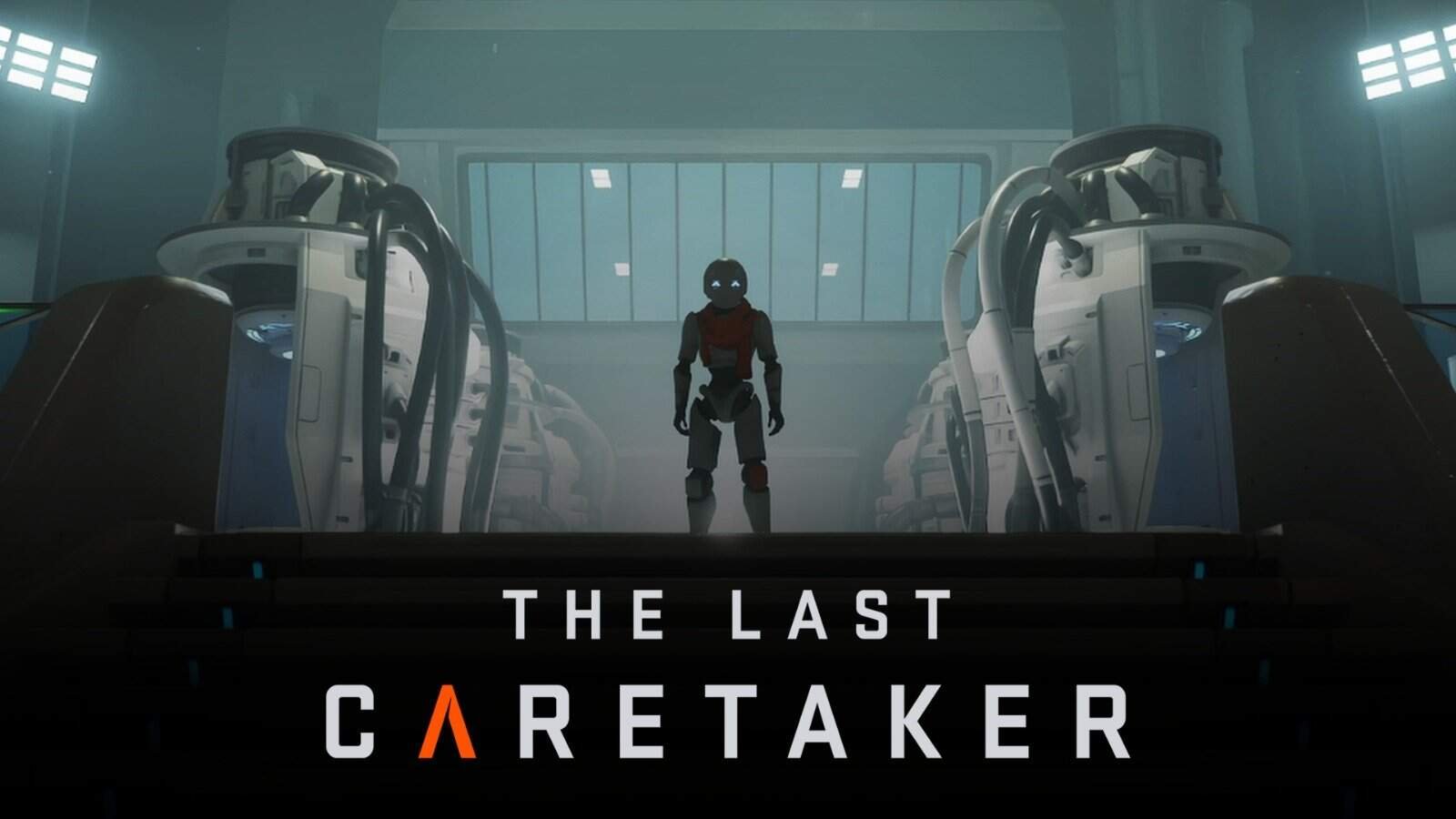
A survival game where power is life — and your ship is your real home
The Last Caretaker quietly released into Early Access and somehow managed to fly under a lot of radars — which is wild, because this might be one of the most interesting survival-exploration games of 2025 so far.
Yes, yes… on paper it sounds familiar. Flooded world. Lone protagonist. Scavenging. Crafting. Power management. You’d be forgiven for rolling your eyes.
But give it an hour — just one solid hour — and you’ll realize this isn’t another checkbox survival game. It’s a systems-driven puzzle experience wearing a survival game skin.
And even in Early Access, the potential here is obvious.
Setting & Premise: Robot, Ruins, and a World That Gave Up
You play as a small caretaker droid in a world that’s completely gone to hell. The oceans swallowed civilization, leaving behind rusting industrial rigs, half-dead complexes, and a sea full of things that really shouldn’t still be moving.
It’s lonely. Quiet. Occasionally unsettling.
Think Subnautica, but less alien wonder and more industrial decay — with a touch of Satisfactory-style problem solving layered on top.
This is not a shooter.
It’s not a horror game.
At its core, it’s an exploration + systems puzzle game.
Power Is the Main Currency (And That’s the Genius)
Here’s the key thing The Last Caretaker does differently:
Power is everything.
- It powers doors
- It powers lights
- It powers crafting
- It powers entire bases
- It powers you
Your droid has two bars:
- Health
- Power (functionally your stamina and lifeline)
When power hits zero, you start taking damage. Keep pushing? You’re terminated.
Running drains power.
Jumping drains more.
Carrying loot drains a lot more.
So every decision matters:
- Do I grab one more item?
- Do I explore one more room?
- Do I retreat now or risk it?
The game never yells at you. It just lets you make bad decisions — and live with them.
That’s rare, and it’s refreshing.
The Ship: Your Real Home (Not the Starting Area)
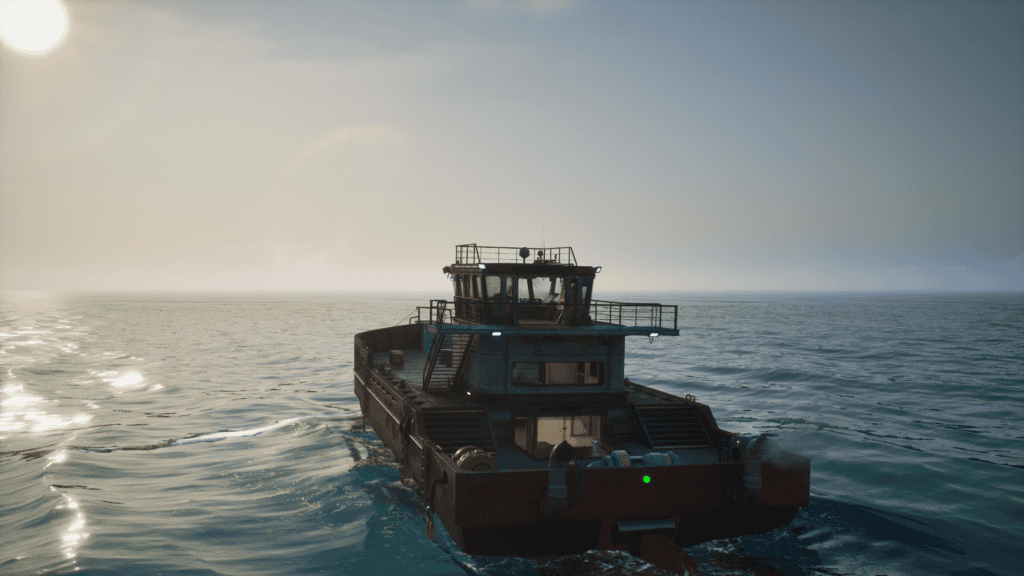
Early on, the game kind of makes the starting area feel like home.
It’s not.
Your ship is your actual base.
This is one of the biggest mindset shifts players need to make — and once it clicks, the game opens up.
Pro tip from real playtime:
- Loot the starting area thoroughly
- Learn the systems
- Do not invest heavily into it
There’s a real chance you won’t return often, if at all.
Instead, your ship becomes:
- Your power hub
- Your storage center
- Your crafting base
- Your lifeline
You can literally plug your droid into it and recharge like a glorified phone. And once you realize you can turn your ship into a massive mobile battery, everything changes.
I stacked batteries, solar panels, and wind turbines on my ship and started using it to power entire bases externally, instead of fixing broken infrastructure everywhere I went.
That alone saves hours.
Exploration & Rigs: Small Outside, Massive Inside
The ocean is dotted with industrial rigs and complexes. From the outside, many look small.
They’re not.
Inside, these places unfold like vertical dungeons:
- multi-floor layouts
- power routing puzzles
- locked systems
- repair challenges
- loot paths that reward planning
This is where The Last Caretaker is at its best.
You’re constantly asking:
- Do I drag cables through half the building?
- Do I reposition my ship to power this section?
- Do I come back later with better gear?
There’s rarely a wrong solution — just smarter ones.
The Lazarus Complex deserves special mention here. You’ll spend a lot of time there, and once you reach it, it actually is worth optimizing properly. This becomes a semi-permanent hub compared to most other locations.

Combat: Currently the Weakest Link
Let’s be honest.
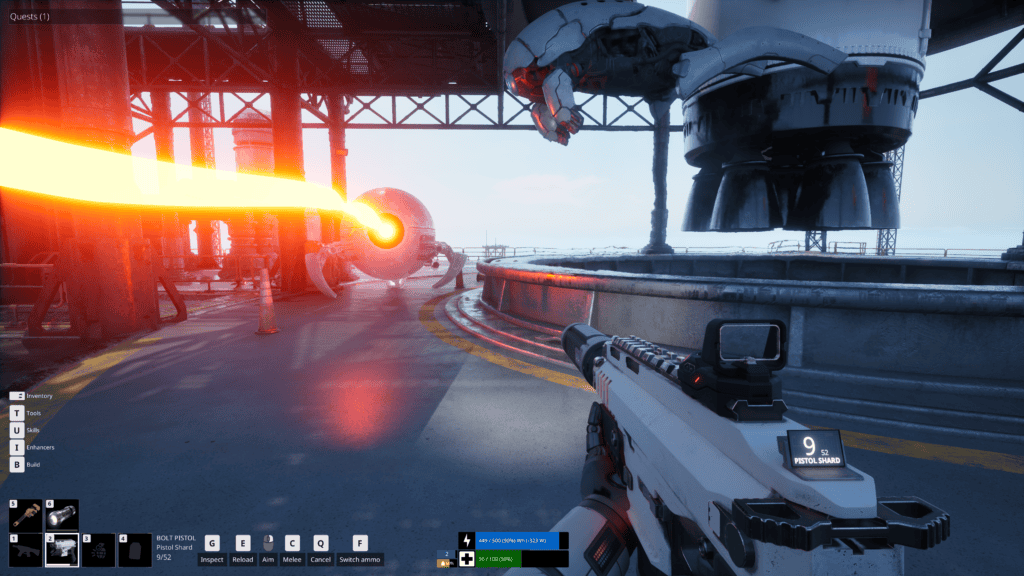
Combat right now is… fine. Barely.
- Melee lacks weight
- Guns feel arcade-like
- Enemies aren’t very threatening
There are creatures — energy-sapping critters, swarm enemies that come out at night, and a few larger threats — but combat never feels like the core challenge.
Honestly? The game could remove combat entirely in its current state and still be great.
This clearly needs a rework or expansion, and thankfully the devs have already hinted at more enemy variety and systems coming.
Early Access excuse? Valid — for now.
UI & Controls: Functional, But Clunky
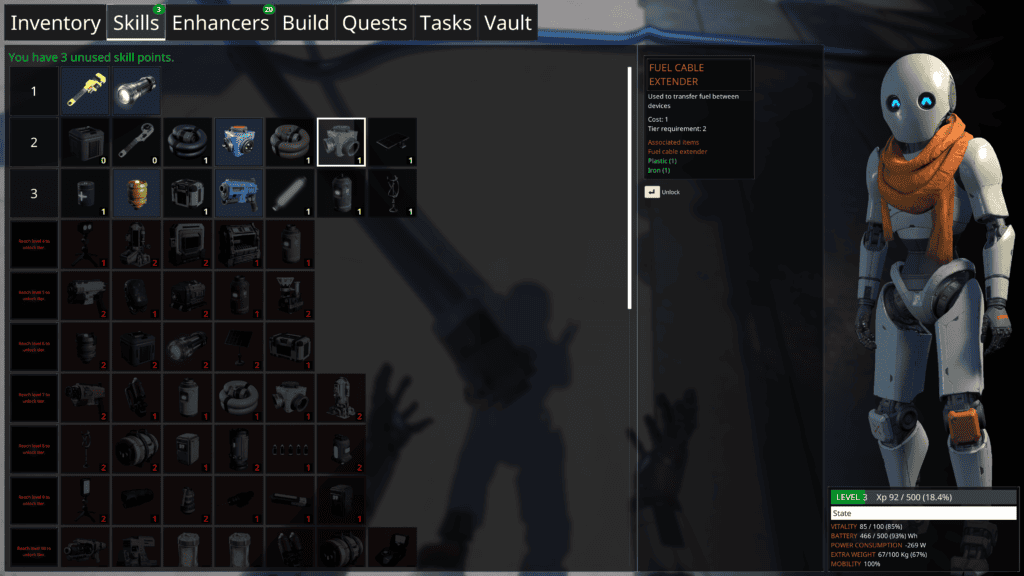
There’s depth here:
- power routing
- crafting chains
- cable management
- storage systems
But the UI still feels awkward at times. After 15+ hours, I was still accidentally plugging cables into sockets when I just wanted to drop them.
Not game-breaking.
Definitely annoying.
This is another area that needs polish before 1.0.
Atmosphere, Sound & Presentation: Where It Shines
Atmosphere is where The Last Caretaker absolutely cooks.
- Lonely seas
- Flickering lights
- Machinery humming under strain
- Storms rolling in
- Nighttime bringing subtle dread
Sound design is excellent:
- recycler thuds
- cable clicks
- power grids struggling
- lights flickering back to life
Those moments where an entire section powers on for the first time?
Chef’s kiss.
Graphically, the game looks fantastic — if your system can handle it. Performance and optimization still need serious work, especially in larger complexes. This is Early Access reality, but it’s worth mentioning.
Final Verdict (Early Access)
The Last Caretaker isn’t perfect. Not even close.
But here’s the important part:
I never felt like I was fighting the game.
I was fighting:
- the world
- the power economy
- my own bad decisions
And that makes all the difference.
It respects your intelligence.
It lets you fail quietly.
It rewards planning over reflexes.
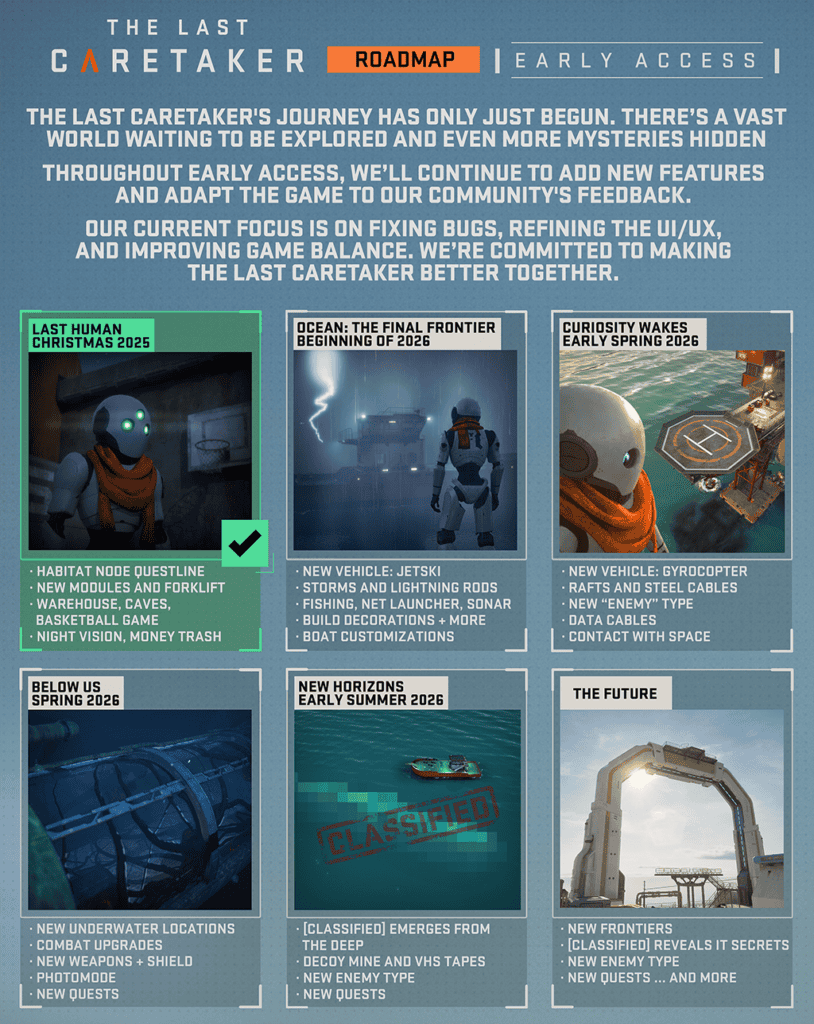
If the developers deliver on their roadmap — especially combat depth, UI polish, and optimization — this could easily be in the Game of the Year conversation at full release.
Should you play it now?
✔ Yes, if you enjoy systems, puzzles, and exploration
✔ Yes, if you liked Subnautica or Satisfactory
⚠ No, if you want tight combat and constant action
Early Access disclaimer applies — but this is one to keep a very close eye on.
Hidden gem?
Yeah. For now.